



How Assertiveness Can Improve Workplace Confidence
Workplace confidence is rarely something people are simply born with. In my work as a therapist and executive coach in New York City, I have seen that confidence grows when people learn how to speak with clarity, set limits without guilt, and stay connected to themselves under pressure. That is why workplace assertiveness matters so much. It is not about becoming hard, combative, or self-centered. It is about learning how to occupy your space with steadiness, communicate your value, and respond rather than retreat when tension appears.

Many capable professionals look confident on the outside while privately second-guessing every meeting, every request, and every difficult conversation. They overexplain, apologize too quickly, or stay silent when their ideas deserve to be heard. Over time, that pattern erodes self-trust. The good news is that confidence can be built through practice. When people develop workplace assertiveness, they do more than improve communication. They begin to feel safer in their own voice, more respected by others, and more grounded in the roles they hold.
Why workplace assertiveness matters more than most people realize
People often assume confidence comes first and assertiveness follows. In reality, the sequence is usually the opposite. When you repeatedly express a clear opinion, ask for what you need, or address a concern directly, your nervous system learns that speaking up is survivable. That repeated experience becomes confidence. Workplace assertiveness gives you the structure for that process. It helps you move from self-protection to self-expression, which is where genuine professional presence begins to form.
At work, silence is not always interpreted as humility. It is often read as uncertainty, disengagement, or lack of leadership readiness. If you consistently avoid difficult conversations, your contributions can be overlooked and your boundaries can be crossed. Assertiveness changes that pattern. It signals self-respect and emotional maturity. You do not need to dominate the room. You need to communicate in a way that is direct, respectful, and consistent. That is what helps colleagues trust your judgment and helps you trust yourself.
The hidden emotional barriers that keep talented people quiet
When people struggle with workplace assertiveness, the issue is not usually a lack of intelligence or ambition. More often, it is a protective strategy formed earlier in life. Some learned that conflict leads to rejection. Others were rewarded for being agreeable, easygoing, or low maintenance. In professional settings, those old adaptations can resurface as people-pleasing, avoidance, or fear of being seen as difficult. The same relational patterns that often emerge in couples counseling can also shape how people handle power, disappointment, and vulnerability at work.
From an Internal Family Systems perspective, many professionals have protective parts that step in when risk is sensed. One part may say, “Do not challenge your manager or you will regret it.” Another may rush to soften every statement so no one feels uncomfortable. These parts are not flaws. They are attempts to keep you safe. But when they lead the conversation, your stronger, more centered self disappears. Workplace assertiveness begins when you can notice those inner reactions without surrendering your voice to them.
Conflict sensitivity is often a nervous system issue
Emotionally Focused Therapy teaches us that when connection feels threatened, people can protest, pursue, withdraw, or freeze. Those responses do not stay inside intimate relationships. They show up in boardrooms, performance reviews, and team meetings. If a colleague sounds critical, your body may register that moment as danger, not dialogue. Suddenly your mind goes blank, your chest tightens, and the perfect response appears three hours later. Understanding this is important because it replaces shame with insight. You are not weak. Your system is reacting before your thinking brain can organize.
Low confidence is often built on repeated self-abandonment
Every time you swallow an important point, agree to an unrealistic deadline, or accept dismissive behavior, you send yourself a quiet message: my needs are less important. That message accumulates. Eventually, low confidence is not just fear of others’ reactions. It is a loss of faith in your own willingness to protect your interests. Assertiveness repairs that rupture. It teaches you to stay loyal to yourself while remaining respectful toward others. That combination is the foundation of durable confidence in any workplace.
What workplace assertiveness actually looks like in practice
One reason people resist assertiveness is that they confuse it with aggression. Aggression tries to overpower. Passivity disappears. Assertiveness stays present. It allows you to speak firmly without attacking, to disagree without contempt, and to say no without collapsing into guilt. In executive coaching, I often frame this as calm strength. You are not trying to win every interaction. You are trying to be clear, credible, and congruent. With the right assertiveness coaching guidance, these skills become learnable behaviors rather than personality traits you either have or do not have.
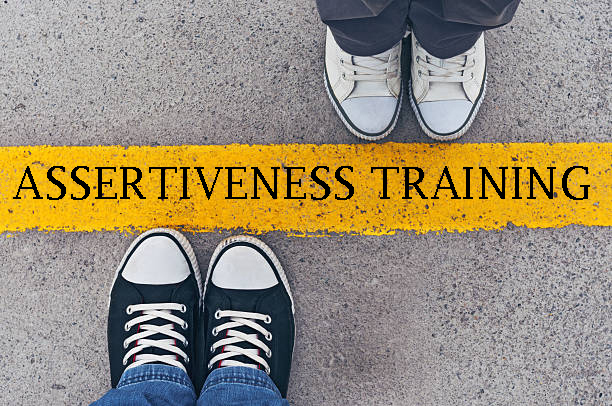
In practical terms, assertiveness sounds simple but intentional. It may mean saying, “I need more time to do this well,” or “I see it differently, and here is why.” It may mean asking for clarification instead of pretending you understand, or naming a concern before resentment builds. These small moments matter because they shape identity. Each time you respond with clarity, you strengthen your sense of agency.
- State your point early instead of waiting until the meeting is ending.
- Use short, clear sentences rather than long apologies.
- Separate disagreement from personal attack.
- Name limits before frustration turns into resentment.
- Let silence do some work instead of filling it with nervous explanation.
Skills that build confidence from the inside out
Assertiveness is easier when you prepare both your words and your body. Before an important conversation, identify your core message in one or two sentences. Then notice the emotional pull that makes you want to dilute it. Are you afraid of disappointing someone, being misunderstood, or losing approval? This is where self-awareness becomes practical. The most effective professionals are not emotionless. They are able to recognize internal reactions without letting those reactions hijack their communication.
Gottman’s concept of the soft startup is especially useful in professional settings. Beginning with blame or defensiveness invites resistance. Beginning with clarity and respect invites engagement. Start with observations, not accusations. Describe impact, not character flaws. Ask for change, not mind reading. These habits reduce escalation and increase the likelihood that your message will actually be heard.
Use language that is direct, grounded, and non-defensive
People who are building workplace assertiveness often benefit from sentence frames because structure lowers anxiety. Try phrases such as, “I want to revisit expectations,” “I am not able to commit to that timeline,” or “I have a different recommendation based on the data.” Notice the tone here: not hostile, not pleading, just clear. When your language becomes simpler, your confidence often rises. Overexplaining usually comes from fear. Directness communicates trust in your own position.
Regulate before you respond
If your body is activated, even excellent scripts may fail. Slow breathing, grounded posture, and a deliberate pace can help you remain connected to yourself. Pause before answering a provocative question. Keep your feet planted. Relax your jaw. These small interventions matter because assertiveness is not only verbal. It is embodied. When your nervous system settles, your voice becomes steadier, your thinking becomes sharper, and your message lands with more authority. Confidence is not just what you say. It is how safely you can stay present while saying it.
How workplace assertiveness changes teams, leadership, and career growth
When one person becomes more assertive in a healthy way, the effect often extends beyond that individual. Meetings become more honest. Expectations become clearer. Resentment has less room to build. Teams function better when people can express concern early, give feedback without humiliation, and negotiate responsibilities without passive resistance. Workplace assertiveness supports psychological safety because it replaces guesswork with communication. It does not eliminate tension, but it makes tension more workable, which is essential for collaboration and leadership.
Career growth also depends on visibility. Talented professionals are sometimes told to “have more executive presence” when what they really need is greater skill in speaking up, setting boundaries, and tolerating the discomfort that comes with influence. Promotions are often tied not only to performance, but to whether others can feel your steadiness under pressure. If you can communicate difficult truths with respect, advocate for priorities, and recover well after conflict, you become easier to trust with larger responsibility.
There is also a quieter benefit that many people do not expect. As assertiveness improves, work becomes less draining. You spend less energy rehearsing imaginary conversations, less time decoding mixed messages, and less emotional effort managing avoidable resentment. Confidence grows because your internal world becomes more coherent. What you think, what you feel, and what you say begin to align. That alignment is deeply stabilizing. It is often the difference between merely coping at work and feeling genuinely grounded there.
Conclusion
Workplace confidence and assertiveness do not require becoming louder, sharper, or more intimidating. It grows when you learn to speak up in a way that protects both your dignity and your relationships. That is the heart of workplace assertiveness. It allows you to remain connected to yourself when pressure rises, conflict appears, or approval feels uncertain. Over time, that practice reshapes how others respond to you, but just as importantly, it reshapes how you respond to yourself.
If you have been waiting to feel confident before you speak, consider reversing the process. Begin with one clear sentence, one honest boundary, one respectful disagreement. Confidence is built through these moments of self-trust. The more consistently you express yourself with calm clarity, the less you depend on external reassurance to feel secure. Speaking up is not the reward for confidence. Very often, it is the path that creates it.

