
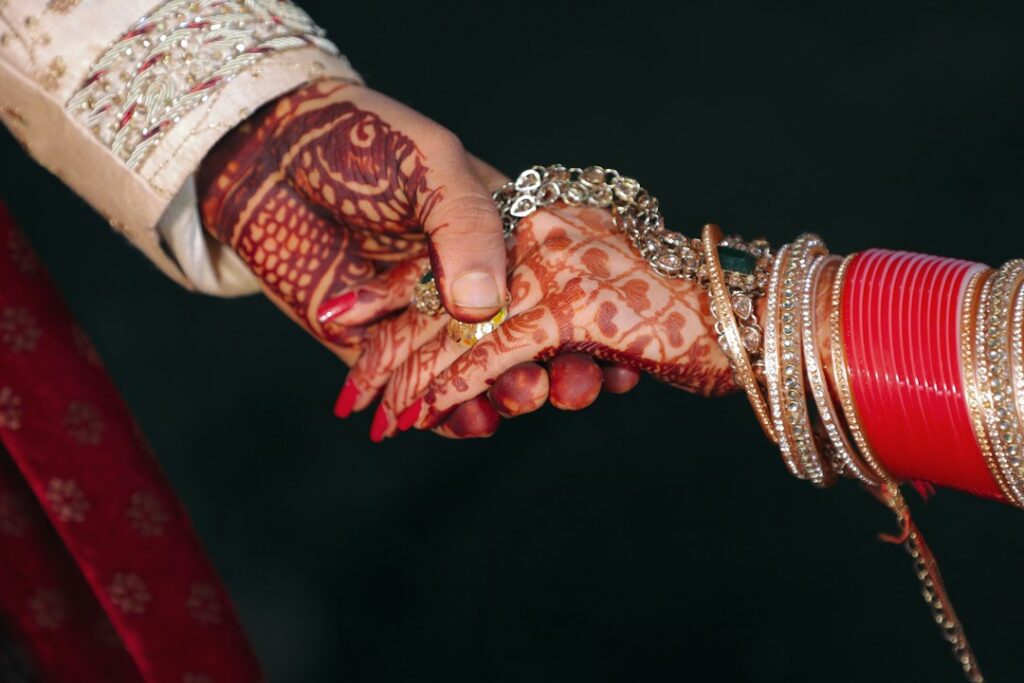


Interfaith and Intercultural Couples: Common Challenges
Interfaith and intercultural couples most often struggle with holidays and rituals, how to raise children, expectations from extended family, and different unspoken rules about money, roles and communication. These differences tend to surface at milestones such as weddings and births. Couples who talk early, stay curious and build shared traditions generally manage them well.
How common are interfaith and intercultural couples?
Very common, and more so with each generation. Pew Research Center’s Religious Landscape Study found that 39% of Americans who married since 2010 have a spouse in a different religious group, compared with 19% of those who married before 1960. Pew counts pairings between a religious person and a partner with no religious affiliation, and those make up a large share of the newer marriages. Among unmarried couples living together, nearly half (49%) were with someone of a different faith.
The picture is similar for race and ethnicity. Pew’s analysis of census data found that 17% of U.S. newlyweds in 2015 had a spouse of a different race or ethnicity, up from 3% in 1967, the year the Supreme Court struck down bans on interracial marriage. The share was higher in metropolitan areas (18%) than outside them (11%).
These figures are several years old, and the trend in both was upward. In a city like New York, where people from many countries and traditions live side by side, a couple from two backgrounds is ordinary. That does not make the differences disappear. It means plenty of couples have worked through them.
What do interfaith and intercultural couples tend to argue about?
Usually not theology. The friction shows up in daily life and at milestones.
- Holidays and rituals. Whose holidays you keep, where you spend them, and whether both sets of traditions live in one home.
- The wedding and other ceremonies. Who officiates, which customs are included, and what each family expects.
- Children. Religious upbringing, naming, circumcision or baptism, schooling, language, and how children are taught to understand who they are.
- Extended family. How much say parents have, how often you see them, and what you owe them in time, care and money.
- Food and the household. Dietary rules, alcohol, modesty, and how a home is kept.
- Money and obligation. Supporting relatives, sending money abroad, and who pays for what.
- Gender roles. Assumptions about work, housework and decision-making that each of you absorbed growing up.
- Communication style. Direct or indirect, loud or quiet, how disagreement and affection are shown.
- End-of-life and mourning customs. Often undiscussed until a death in the family forces the question.
Outside pressure matters too. Disapproval from relatives, or stares and comments from strangers, puts weight on a couple that has nothing to do with how they treat each other.
Why do the differences show up later?
Many couples say the differences did not matter when they were dating. That is often true. Early on you are two adults making your own choices. Certain moments then bring each person’s background to the surface: an engagement, a wedding, a first child, a parent’s illness, a death.
At those moments people frequently discover that something they thought they had left behind still matters to them. A partner who has not attended services in years may feel strongly that a baby should be baptized, or have a bris, or carry a family name. This is not hypocrisy. Tradition is tied to belonging and to parents and grandparents, and those ties get louder at turning points.
Culture also works below awareness. Each of you grew up with a version of “normal” for how families talk, how close relatives stay and what respect looks like. When your partner does it differently, it is easy to read a cultural habit as a personal flaw: “you are cold,” “your family is intrusive,” “you never say what you mean.” Seeing the cultural layer is often what takes the sting out of those judgments.
What does the research say about mixed marriages?
It is more reassuring than the warnings couples sometimes hear from relatives, with a few honest cautions.
Most interfaith couples do not fight much about religion. A 2016 Pew report on religion in marriages and families found that people in religiously mixed marriages reported somewhat more disagreement about religion than same-faith couples, but majorities said such disagreements were not common. They also discussed religion with their spouses less often. Whether that reflects ease or avoidance, the survey cannot say.
Religious difference has been linked to somewhat lower stability and satisfaction in some studies. An analysis of a 1987-88 national survey found that religious differences between spouses were associated with less stable marriages. That is old data from a different era. More recently, a study of 953 older adults and their partners found that couples who differed in how often they attended services reported lower relationship happiness and satisfaction, partly because they spent less free time in shared activities. The participants were ages 62 to 91, and the findings concern attendance, not belief or affiliation.
For interracial couples, the evidence does not show that the difference itself is the problem. A study of 23,139 married couples found that interracial marriages looked less stable at first glance, but after taking couple characteristics into account the authors found no evidence that interracial marriage in itself raised the risk of divorce or separation.
All of this research describes averages across large groups, and most of it concerns married couples. It cannot predict what will happen to you. The useful takeaway is narrower: shared time and shared meaning seem to matter, and couples from two backgrounds have to build those on purpose instead of inheriting them.
How can couples handle the differences well?
- Get curious before you negotiate. Ask what a tradition means to your partner and what memory it carries. “Why does this matter to you?” is a better opening than “Do we have to?”
- Separate preferences from essentials. Each of you probably has one or two things that feel central to who you are and many that are simply familiar. Know which is which.
- Talk about children early. Decide in broad terms before pregnancy if you can, and expect to revisit it. Agreements made in the abstract often shift once a child is real.
- Present a united front to families. Each partner takes the lead with their own relatives, and you settle your position together first. The guide article on in-laws and your marriage goes into this.
- Create rituals that belong to the two of you. A way of marking Friday night, a December that includes both traditions, a meal that blends two kitchens. Couples who build something shared tend to feel less like they are trading losses.
- Do not ask your partner to carry your family’s prejudice. If relatives are disrespectful, the partner whose family it is addresses it.
- Expect grief. Any compromise means someone gives up part of what they pictured. Acknowledging that openly prevents quiet resentment.
If you are engaged or moving in together, raise these subjects now. The practice’s list of premarital questions every couple should explore is a useful prompt, and so is the guide article on conversations to have before moving in together.
When is it worth getting professional help?
Think about it when the same argument returns at every holiday, when a decision about a wedding or a child is stuck, when one of you feels asked to give up who you are, or when family pressure is dividing you. Couples counseling is not about deciding whose tradition wins. It is a place to slow the conversation down, understand what each position protects, and find an arrangement both of you can live with.
It helps to work with a therapist who is comfortable with cultural and religious difference and does not treat either background as the problem. Language can matter as well. At spiral2grow, sessions are available in Hebrew as well as English, as the page on Hebrew-speaking psychotherapy explains.
Talking it through together
If differences in faith or culture have become a source of distance, a conversation with a therapist can help you find common ground. Moshe Ratson, LMFT, offers a free phone consultation and sees couples in Midtown Manhattan and Online by Video. You can get in touch with spiral2grow to describe your situation and ask questions.
Common questions
Some older studies found that religious differences between spouses were linked to somewhat lower marital stability, but the data are dated and the effect is an average, not a prediction. Pew surveys find that most interfaith couples report little conflict about religion. How a couple handles the difference matters more than the difference itself.
There is no single right answer. Some choose one tradition, some teach both, and some raise children with neither and let them decide later. What helps is talking before children arrive, being honest about what each of you cannot give up, and agreeing to revisit the plan as children grow.
It is painful, and it is usually the job of the partner whose family it is to address it. Agree together on what you will and will not tolerate, then speak to your relatives yourself. Protecting your partner from disrespect, while leaving room for your family to adjust over time, tends to work better than ultimatums.
Conversion is a personal religious decision and works only when it is freely chosen. Converting under pressure, to keep the peace or satisfy relatives, often leads to resentment later. Many couples do well without either partner converting. If the question is causing strain, clergy and a couples therapist can each help in different ways.
Sources
- Interfaith marriage is common in U.S., particularly among the recently wed, Pew Research Center
- Intermarriage in the U.S. 50 Years After Loving v. Virginia, Pew Research Center
- One-in-Five U.S. Adults Were Raised in Interfaith Homes: Religion in marriages and families, Pew Research Center
- The impact of family background and early marital factors on marital disruption (Bumpass, Martin and Sweet, Journal of Family Issues, 1991), PubMed, National Library of Medicine
- Religious Heterogamy and Partnership Quality in Later Life (Schafer and Kwon, Journals of Gerontology Series B, 2019), PubMed, National Library of Medicine
- Marital Dissolution Among Interracial Couples (Zhang and Van Hook, Journal of Marriage and Family, 2009), PubMed, National Library of Medicine
This article is part of the Couples Counseling Guide. It is general information, not a substitute for care from a licensed professional who knows your situation.
This article is for general education. It is not a substitute for professional advice, diagnosis or treatment.

