



Managing Excessive Worry
Introduction
Montaigne: “My life has been full of terrible misfortunes, most of which never happened.”
The above statement by Montaigne (a French philosopher) illustrates the power of the mind in our lives, or more specifically, the negative power of a worried mind that has nothing to do with reality. Excessive worry is exhausting and has negative consequences for your emotional and physical well-being. The imagination of the worrier is full of thoughts about things that will never happen, or that turn out to be not as bad as imagined. The negative, protective mind cannot let go of troubling, pessimistic thoughts and cannot see beyond a negative outcome.
There is something about worrying that makes it hard to give up. In fact, worrying can be beneficial. Worrying is a defense mechanism that alerts you to danger or negative consequences. Ignoring back pain or not preparing your car for the winter might cause you some serious troubles. Worry directs your attention to a possible problem or unstable situation and pushes you to take a constructive action toward resolving it. For example, worrying about downsizing could motivate you to prepare a resume and upgrade your skills, or look for another job in another company.
When the Mind Refuses to Sit Still
Some people carry worry the way others carry a wallet or phone. Constantly. Quietly. Automatically.
The mind scans. Predicts. Rehearses. Calculates. It jumps ahead into conversations that have not happened, disasters that may never occur, and outcomes nobody can truly control. Even during moments of rest, something inside remains emotionally braced — as if life might suddenly collapse if vigilance drops for a second.
Many excessive worriers are not dramatic people. They are often thoughtful, responsible, intelligent, sensitive, and highly conscientious. The problem is not that they think too little. The problem is that their mind never receives permission to stop.
Worry begins to function like psychological background noise.
At first glance, worry appears useful. And to some extent, it is.
- A parent worries about a child because love creates concern.
- An entrepreneur worries about business because responsibility matters.
- A student worries before an exam because performance matters.
- A partner worries about a relationship because attachment matters.
A complete absence of worry would probably indicate emotional detachment, recklessness, or denial. Human beings need a certain amount of anxiety to survive, prepare, adapt, and protect what they value.
The nervous system was designed to detect danger. The issue begins when the alarm system no longer knows when to turn itself off.
Healthy Worry vs. Psychological Imprisonment
Healthy worry has movement in it. It identifies a problem, mobilizes attention, and encourages action. Excessive worry does the opposite. It traps people inside endless mental loops without resolution.
One leads toward action. The other leads toward exhaustion. A healthy concern says: “I should prepare for this meeting.”
Excessive worry says: “What if I fail, embarrass myself, lose credibility, disappoint everyone, ruin my future, and never recover?”
The anxious mind rarely stops at reality. It escalates. Expands. Catastrophizes.
This is why excessive worry feels so emotionally draining. The body reacts physiologically to imagined threats almost as strongly as real ones. Heart rate increases. Muscles tighten. Sleep becomes shallow. Concentration weakens. The nervous system lives in anticipation.
Some people do not even remember what true relaxation feels like anymore. Their body may be sitting on a couch, but internally they are preparing for impact.
The Illusion of Control
One of the great psychological seductions of worry is the illusion that thinking more equals controlling more. It does not.
Many worriers unconsciously believe:
“If I think about it enough, I can prevent bad things from happening.”
But excessive mental rehearsal is not mastery. Most of the time it is fear disguised as preparation.
There is a profound difference between solving a problem and emotionally orbiting around it.
Problem-solving asks: “What can I realistically do?”
Chronic worry asks: “What if?”
And “what if” has no ending.
- What if I fail?
- What if they leave?
- What if I disappoint people?
- What if something happens to my health?
- What if I make the wrong decision?
- What if I cannot handle it?
The mind searches for certainty in a world that cannot provide it. That is the tragedy of anxiety: the desperate attempt to secure an inherently uncertain life.
Why Intelligent People Often Worry More
Intelligence can become both a gift and a burden. The more imaginative the mind, the more scenarios it can generate.
Highly perceptive people often see multiple possibilities simultaneously. They detect subtle emotional shifts. They anticipate consequences quickly. They mentally simulate future outcomes before others even notice a problem exists.
This ability can create success professionally and intellectually. But emotionally, it can become torture.
The same imagination that creates innovation can also create catastrophe.
Some individuals become trapped in over-analysis. They research endlessly, replay conversations repeatedly, examine tiny emotional details, and attempt to anticipate every possible outcome before taking action.
Perfectionism often hides underneath this pattern. Not because the person wants excellence alone, but because mistakes feel psychologically dangerous.
- Failure becomes associated with shame.
- Rejection becomes associated with worthlessness.
- Uncertainty becomes associated with emotional danger.
The person is no longer simply trying to succeed. They are trying to avoid emotional collapse.
The Body Keeps the Score of Worry
Excessive worry does not only live in thoughts. It settles into the body. The body remembers chronic vigilance. Worry can manifest in the following ways: Tight shoulders. Jaw tension. Digestive issues. Sleep disturbances. Headaches. Fatigue. Restlessness. Shallow breathing.
Many anxious individuals wake up already emotionally tired before the day even begins. Their nervous system never fully powers down.
Sometimes people say, “I cannot relax.”
What they often mean is: “My body no longer feels safe enough to relax.”
This distinction matters.
Because managing worry is not simply about “thinking positively.” It is about teaching the nervous system that danger is not constantly present.
This is why physical regulation matters profoundly. The following activities can be very helpful: Walking. Breathing slowly. Reducing overstimulation. Exercise. Meditation. Silence.
Sleep. Less caffeine. Less doom-scrolling. More human connection.
The body cannot heal in permanent emergency mode.
The Addiction to Mental Rehearsal
Many excessive worriers become addicted to overthinking without realizing it.
The mind believes:
“If I keep thinking, I am doing something productive.”
But often, the person is emotionally circling the same fear repeatedly.
Worry creates temporary emotional control because thinking feels safer than feeling.
Thinking delays vulnerability.
Instead of sitting with fear, sadness, loneliness, uncertainty, grief, or helplessness, the person mentally analyzes life endlessly.
The mind stays busy so the heart never has to fully feel.
This is why some worriers become uncomfortable with silence. Quiet moments allow buried emotions to rise to the surface.
And sometimes underneath chronic anxiety lies something much deeper:
fear of abandonment, inadequacy, humiliation, loss, not mattering.
Worry is often the surface symptom. Not the core wound.
The Need to Build Tolerance for Uncertainty
One of the hardest psychological tasks in life is accepting uncertainty without collapsing emotionally.
Anxiety constantly asks for guarantees.
But adulthood offers very few.
No relationship comes with certainty.
No career comes with certainty.
No investment comes with certainty.
No body remains forever unchanged.
No future arrives with complete predictability.
People who heal from excessive worry usually do not suddenly gain control over life.
They gain greater tolerance for not controlling life.
That changes everything.
Psychological strength is not the absence of fear. It is the ability to function while fear exists.
Confidence is often misunderstood. Confidence is not certainty. Confidence is trust in one’s ability to adapt, respond, recover, and survive difficulty.
That is a very different mindset.
The Difference Between Awareness and Obsession
Self-awareness is healthy. Obsession is imprisonment.
There is a difference between reflecting and mentally attacking yourself.
Some worriers become emotionally trapped in self-monitoring:
- “Did I say the wrong thing?”
- “What did they mean by that text?”
- “Do they secretly dislike me?”
- “What if I made a mistake?”
- “What if I overlooked something?”
The mind becomes a courtroom where the self is constantly on trial. This creates enormous emotional exhaustion.
At some point, people must learn to interrupt the interrogation.
- Not every thought deserves investigation.
- Not every fear deserves obedience.
- Not every emotion predicts reality.
The anxious mind frequently confuses possibility with probability. Yes, something bad could happen. But many things could happen.
The worrier selectively rehearses catastrophe while ignoring resilience, adaptability, support, and survival.
Learning to Return to the Present
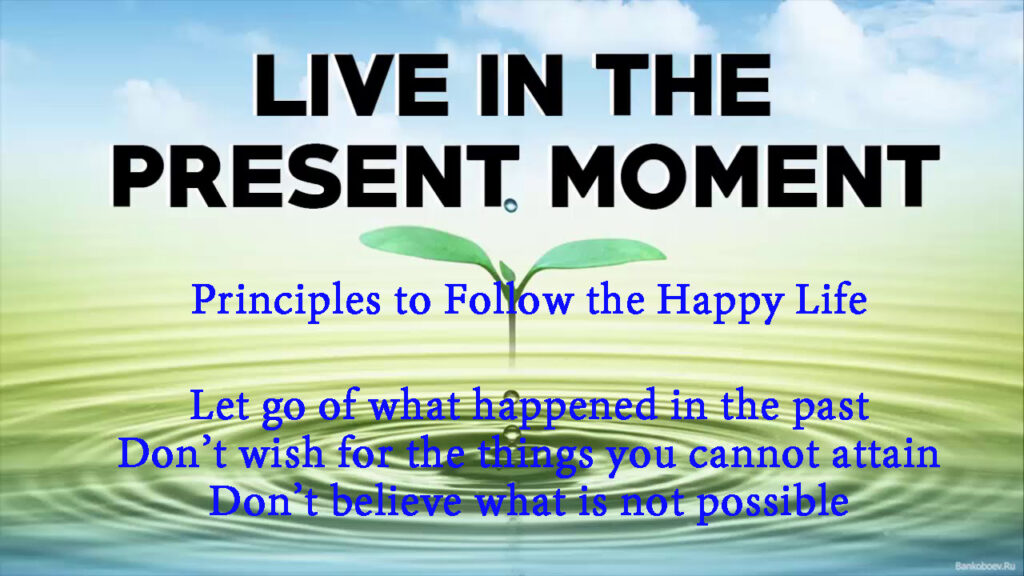
Worry lives in the future. Life happens in the present.
This sounds simple, but psychologically it is extremely difficult.
Many people spend their lives mentally absent from the moments they are physically living.
Dinner is interrupted by future fears.
Vacation becomes logistical anxiety.
Love becomes fear of loss.
Success becomes fear of failure.
Peace becomes suspicious.
The person cannot fully inhabit life because the mind remains preoccupied with what might go wrong next.
Mindfulness is not about becoming passive or detached. It is about returning attention to what is actually happening rather than what the anxious imagination predicts.
Right now.
In this moment.
What is real?
Not tomorrow.
Not next year.
Not imagined disaster.
Now.
This practice alone can significantly reduce emotional spiraling.
The Importance of Positive Self-Talk
Excessive worriers often speak to themselves in ways they would never speak to someone they love.
The internal dialogue becomes harsh, catastrophic, and unforgiving.
- “You are going to fail.”
- “You cannot handle this.”
- “You always mess things up.”
- “Something terrible will happen.”

Over time, the nervous system starts believing these messages.
Part of healing involves developing a calmer internal relationship with oneself.
Not false positivity.
Not denial.
Not motivational clichés.
Grounded reassurance.
- “I can handle discomfort.”
- “I have survived difficult moments before.”
- “I do not need absolute certainty to move forward.”
- “I can make mistakes and still be worthy.”
- “I can feel fear without surrendering to it.”
Sometimes emotional healing begins with changing the tone of the voice inside the mind.
Relationships and Worry
Excessive worry rarely stays private. It leaks into relationships.
Anxious individuals may seek constant reassurance, overanalyze interactions, become reactive to perceived rejection, or emotionally flood during conflict. Their nervous system becomes hypersensitive to emotional shifts.
A delayed text suddenly feels threatening.
Distance feels like abandonment.
Disagreement feels catastrophic.
The person is not merely reacting to the present moment. They are reacting to accumulated emotional fear. This is why emotional safety matters so deeply in relationships.
Not perfection. Safety.
The ability to communicate openly, regulate conflict, tolerate vulnerability, and reassure without losing oneself.
Supportive relationships can help calm excessive worry. But relationships alone cannot heal an anxious mind. Otherwise reassurance would permanently solve anxiety — and it rarely does.
At some point, individuals must learn how to internally soothe themselves rather than relying exclusively on external reassurance.
Healing Is Not the Elimination of Fear
People often ask: “How do I stop worrying completely?”
You probably do not. Nor should you.
The goal is not emotional numbness. The goal is freedom from psychological domination.
Fear is part of being human.
Uncertainty is part of being alive.
Vulnerability is part of love.
Risk is part of growth.
A meaningful life cannot be lived without emotional exposure. The real question becomes:
- Can we feel uncertainty without surrendering our entire life to it?
- Can we move forward without guarantees?
- Can we trust ourselves enough to live despite unpredictability?
At some point, managing excessive worry requires a shift from controlling life toward participating in life. That shift is deeply psychological. And deeply liberating. Because eventually we realize something important:
Most of our suffering did not come from life itself.
It came from mentally trying to survive life before it happened.
Tips that Help with Excessive Worry
Many of us worry needlessly and excessively and live our lives in fear, plagued with anxiety and a general overall feeling of uneasiness. Here are some tips that will help you stop excessive worry and have inner peace:
- Write down the three things (concerns) that you worry excessively about. Only focus on these three major worries that seem to be on your mind on a daily basis. Order these concerns from most serious to least serious as the lowest.
- For each worry, ask yourself if you can or cannot control it. For example, if you are worried about the deterioration of your health, determine if this is something you can or cannot control. In other words, determine what is within your control and what is beyond your control. In this case, you can control how you take care of yourself by eating healthy food, exercising, sleeping well, and reducing stress. You can control parts of this worry, but of course not the entire worry itself.
- If you find yourself worrying excessively over things you cannot control, try to shift your narrow perspective on the negative consequences and look at the bigger picture of life. Say to yourself, “STOP, I am wasting my energy on things I cannot control.” “I better be constructive with my energy.”
- Allow yourself to worry for 10 minutes per day. Set aside this time daily and use this time only for your worries. You may eventually stop doing this by realizing that it is a waste of time. Until this realization settles, you need some time just to feel your fears, and eventually move on to more productive activities.
The above ideas are not easy to implement as it requires a continual resistance to the worry mind. Remember, do not allow yourself to have excessive worry over the things you cannot control. You will waste valuable time and energy in your life worrying about these things.

