



Marriage with a Large Age Difference Between the Spouses
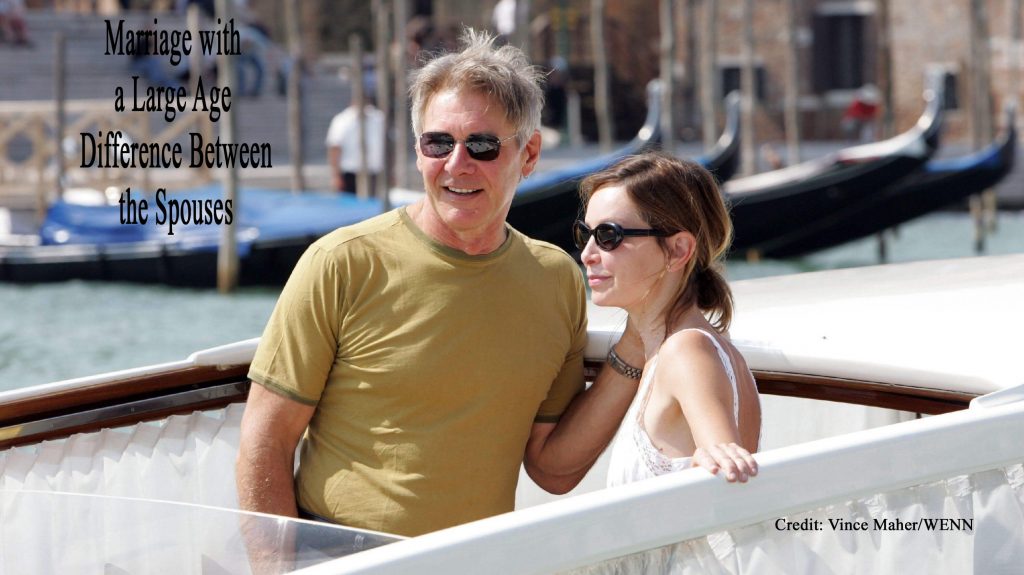
While there is variation across cultures in the size of the difference in age-gap couples, in western countries romantic couples with a large age gap often raise eyebrows and may come with social disapproval. While general research suggests that marriage with a wider the age gap, has a lower chance of success and a lower likelihood that a pairing will last, the question still remains “Shall we still marry a much older or younger spouse?
As I mentioned, statics show that marring with ages difference of less than five years of each other were significantly less likely to divorce than couples who had age gaps of, say, 15 or 25 years. Yet, I do believe that we should not relay on statics to answer the question if we shall marry or not a younger or older man or a woman. Each couple needs to be analyzed on case by case basis and be evaluated within the context of the relationship as well as personal preferences.
The fact is that there are no rules when it comes to forecasting how happy a couple with a large age gap will be. It is important to remember that the difference of age is part of the attraction between the couples and encompasses the narrative and meaning of each individual has about that aspect and as well as their preferences. From evolutionary standpoint, women might be more attracted to status and resources, which explains why some women may be attracted to older men. On the other hand, some men value attractiveness and vitality more than women, which explains why some man are attracted to younger women. For them, they see youth as an indicator of fertility. For many, the evolutionary reason was the root explanation for older man-younger woman pairings.
Like any other successful marriages, relationships must have healthy foundation to include enough common bond, warm, similar values, beliefs and goals, healthy partnerships dynamics as well as sexual compatibility. In this regard, some research outcome found that relationship satisfaction reported by age-gap couples is higher. These couples also testify greater trust and commitment with lower jealousy as compare to a similar-age couples. The above factors have little do with age difference and more about healthy marriage foundation.
It is my believe that while the age gap between spouses may bring some challenges for couples, if couples work at their relationship, age should be no barrier. My personal opinion is don’t let an age gap deter you if you’re attracted, you get along, and you are basically on the same page, go for it and enjoy your life and relationship. No one knows what the future will bring, so enjoy the present, while you are aware and mindful about the implications of your decision. You are the one that knows what is best for you. No one else.
Understanding the Opportunities and Challenges of Age-Gap Relationships
Love does not always follow a predictable path. While many couples are close in age, others discover a deep emotional connection despite a difference of ten, fifteen, twenty years, or even more. Age-gap marriages have existed throughout history, yet they continue to generate curiosity, skepticism, and, at times, criticism. Friends and family may question the couple’s motives, society may make assumptions about their compatibility, and the partners themselves may wonder whether their age difference will eventually become a significant obstacle.
As a marriage and family therapist, I have learned that the success of a relationship is rarely determined by a single characteristic such as age. Relationships succeed or struggle because of the way two people communicate, resolve conflict, manage differences, and nurture emotional intimacy. An age difference, by itself, neither guarantees happiness nor predicts failure. However, it does introduce unique opportunities and challenges that deserve thoughtful consideration.
Love May Bring People Together, but Life Requires Compatibility
The excitement of falling in love often allows couples to overlook differences that become more noticeable as everyday life unfolds. An age gap may initially seem insignificant when both partners feel emotionally connected, intellectually stimulated, and deeply attracted to one another. Yet marriage is about much more than romantic chemistry. It involves building a shared life, making financial decisions, raising children if desired, planning for retirement, caring for aging family members, and adapting together as both partners move through different developmental stages.
A couple separated by many years may find themselves experiencing life from very different perspectives. One partner may be focused on establishing a career while the other is considering retirement. One may be eager to travel extensively, while the other is becoming more concerned about health limitations. One may be thinking about starting a family while the other may already have adult children or may feel they have completed that chapter of life.
These differences are not necessarily problems. Difficulties arise only when they remain unspoken or when couples assume love alone will resolve them.
Different Life Stages Can Create Different Needs
Developmental psychology reminds us that people often face different psychological tasks at various stages of adulthood. Younger adults frequently focus on building careers, exploring identity, establishing financial security, and creating families. Later adulthood often brings different priorities, including legacy, health, simplifying life, and preparing for retirement.
When spouses occupy different life stages, misunderstandings can emerge. The younger partner may desire adventure, career advancement, or social activity, while the older partner may prioritize stability, routine, and quieter pursuits. Neither perspective is inherently better. They simply reflect different seasons of life.
Healthy couples recognize these differences with curiosity rather than judgment. They understand that successful relationships require flexibility, empathy, and ongoing dialogue about changing needs rather than assuming both partners should always want the same things.
The Influence of Social Judgment
One challenge unique to many age-gap marriages is the scrutiny they receive from others. Family members may question whether the relationship is based on genuine love or on financial security, physical attraction, social status, or other external motivations. Friends may express concern, sometimes openly and sometimes subtly, about the couple’s long-term compatibility.
These judgments can create additional stress, particularly during the early years of the relationship. Couples may feel compelled to defend their decisions or repeatedly explain why they are together. Over time, this external pressure can either strengthen the relationship by encouraging unity or create tension if one or both partners begin internalizing society’s doubts.
Emotionally healthy couples learn to distinguish between thoughtful concerns raised by loved ones and assumptions rooted in stereotypes. Rather than becoming defensive, they honestly examine their relationship while remaining confident in their own experience.
Health and the Reality of Aging
Perhaps the most practical consideration in marriages with significant age differences involves the reality of aging. While everyone grows older, spouses separated by many years often encounter health-related challenges at different times.
The older partner may begin experiencing physical limitations while the younger spouse remains in the midst of an active career or raising children. Eventually, one partner may become a caregiver much earlier than expected.
These possibilities should not discourage couples from pursuing meaningful relationships, but they should encourage honest conversations before marriage. Discussing expectations regarding health, caregiving, finances, long-term planning, and retirement demonstrates maturity rather than pessimism. Couples who address these realities together often feel more prepared when life inevitably changes.
Communication Matters More Than Age
Research consistently shows that communication remains one of the strongest predictors of relationship satisfaction. This principle applies equally to age-gap marriages.
Successful couples openly discuss expectations regarding finances, intimacy, parenting, career goals, family relationships, and future planning. They recognize that assumptions often create unnecessary conflict, whereas honest conversations strengthen trust.
Age differences may also influence communication styles. Partners from different generations sometimes approach technology, work-life balance, gender roles, or emotional expression differently because they were shaped by different cultural experiences. Instead of viewing these differences as obstacles, healthy couples become curious about one another’s perspectives. Curiosity creates understanding, while judgment creates distance.
Emotional Maturity Is More Important Than Chronological Age
One of the greatest misconceptions about age-gap relationships is that chronological age automatically determines emotional maturity. In reality, emotional maturity develops through self-awareness, life experiences, personal growth, and the willingness to learn from relationships. Some younger individuals demonstrate remarkable wisdom and emotional stability, while some older adults continue repeating unhealthy relational patterns.
A thriving marriage depends far less on the number of birthdays each partner has celebrated than on qualities such as empathy, humility, accountability, flexibility, and emotional regulation. These characteristics allow couples to navigate inevitable differences with respect rather than defensiveness.
As a couples therapist in Manhattan, I know that the healthiest relationships are those in which both partners continue growing together, regardless of age.
Building a Shared Future
Every marriage requires couples to create a shared vision of the future. This process becomes especially important when there is a significant age difference. Conversations about retirement, financial planning, children, caregiving, lifestyle preferences, and long-term goals should occur early and continue throughout the relationship.
Rather than focusing exclusively on present happiness, couples benefit from asking thoughtful questions. How do we imagine our lives ten or twenty years from now? What challenges might we face? How will we support one another through changing circumstances? These conversations strengthen commitment because they encourage partners to prepare for life’s realities together rather than hoping difficult issues will somehow resolve themselves.
Love Requires More Than Compatibility
Every marriage involves differences. Some couples differ in culture, religion, personality, education, family background, or life experiences. An age difference is simply one more difference that must be understood and navigated thoughtfully.
The quality of a marriage ultimately depends less on age than on the couple’s ability to cultivate trust, communicate honestly, resolve conflict respectfully, and support one another’s growth. When partners approach one another with curiosity, compassion, flexibility, and mutual respect, age becomes only one aspect of a much richer relationship.
Love may bring two people together, but it is emotional maturity, shared values, intentional communication, and a willingness to grow through life’s changing seasons that sustain a marriage over time. Couples who recognize both the opportunities and the realities of an age-gap relationship place themselves in a far stronger position to build a marriage that is resilient, deeply connected, and fulfilling for both partners.
Here is a link for an article on the subject by the New York Post, who also quoted me: https://nypost.com/2019/05/01/were-24-years-apart-and-crazy-in-love/

