



Anger Management and Emotional Regulation Tips
Human beings spend a great deal of energy trying not to feel uncomfortable emotions. We distract ourselves from sadness, suppress anxiety, deny jealousy, numb shame, and try to eliminate anger as quickly as possible. Yet the more we struggle against our emotions, the more powerful they often become. It is as if emotions are knocking on the door of our consciousness, asking to be heard, and our attempts to silence them only make them knock louder.

Perhaps one of the most important psychological truths is that emotions are not problems to solve but experiences to understand. Anger, fear, guilt, disappointment, loneliness, envy, and grief are part of the human condition. They can be painful and uncomfortable, but they are also messengers. They tell us what matters to us, where our wounds reside, what values we cherish, and what needs require attention.
The goal of emotional management, therefore, is not to become emotionless. The goal is to become emotionally intelligent—to learn how to experience emotions fully without becoming controlled by them. This is especially true when it comes to anger, one of the most misunderstood and feared emotions.
Understanding Anger as a Messenger
Many people see anger as destructive, and indeed it can be when expressed impulsively or aggressively. However, anger itself is not the enemy. Anger is an emotional alarm system. It arises when we perceive a threat, an injustice, a violation of our boundaries, or an obstacle to something important to us.
Sometimes anger protects our dignity. Sometimes it alerts us that our needs are not being met. Sometimes it gives us the energy to confront difficult situations or to advocate for ourselves and others.
The problem begins when we react automatically rather than listen carefully to what anger is trying to communicate.
When you become angry, ask yourself: What am I protecting? What value feels threatened? Am I hurt, disappointed, afraid, or feeling powerless beneath the anger?
These questions can transform anger from a destructive force into a source of insight. Instead of exploding outward or imploding inward, you begin to understand the emotional landscape underneath the reaction.
Anger Often Hides Other Emotions
One reason anger feels so powerful is that it often covers more vulnerable emotions. Many people find it easier to express anger than sadness, fear, shame, or rejection. Anger creates a sense of strength and certainty, while vulnerability can feel risky and uncomfortable.
A husband who becomes angry when his wife criticizes him may actually feel hurt or inadequate. An executive furious about losing a client may secretly fear failure. A teenager who reacts aggressively to limits may be experiencing shame or insecurity.
Learning to ask, “What else am I feeling?” opens the door to emotional maturity. It allows us to address the deeper issue rather than fighting the symptom.
Stop Trying to Get Rid of Emotions
One of the biggest mistakes people make is believing that emotional health means feeling good all the time. It does not.
Emotional health means developing the capacity to experience the full range of emotions without becoming overwhelmed or avoiding them. Happiness is not the absence of sadness. Courage is not the absence of fear. Calmness is not the absence of anger.
In fact, uncomfortable emotions often serve an important purpose. Anxiety can motivate preparation. Sadness can help us process loss. Guilt can guide us toward repairing harm. Anger can inspire change.
The challenge is learning to sit with these emotions long enough to understand them.
Imagine treating your emotions the way you would treat a frightened child. You would not yell at the child to stop crying or shame them for feeling afraid. You would approach with curiosity and compassion. You would ask, “What happened?” and “What do you need?”
Our emotions deserve the same response.
Emotional Regulation Begins in the Body
People often think emotions are purely mental experiences, but emotions are deeply physical. Anger can cause muscle tension, increased heart rate, and shallow breathing. Anxiety may create stomach discomfort, restlessness, or dizziness. Sadness can leave us feeling heavy and fatigued.
Because emotions live in the body, emotional regulation often begins there as well.
When you feel emotionally overwhelmed, resist the urge to react immediately. Instead, slow down your breathing. Take a walk. Stretch your body. Notice where the emotion resides physically.
Ask yourself:
What sensations am I experiencing?
What is happening in my body?
What would help me feel grounded right now?
These simple practices help calm the nervous system and create space between feeling and action. In that space, wisdom becomes possible.
Learn the Art of the Pause
Some of the greatest regrets in life occur not because we felt intense emotions but because we acted on them impulsively.
The angry email sent at midnight.
The harsh words spoken during an argument.
The impulsive decision made out of fear.
The relationship ended in a moment of emotional flooding.
Emotional maturity requires learning the art of the pause.
A pause is not avoidance. It is not suppression. It is the intentional decision to slow down long enough to choose a response rather than automatically repeating old patterns.
The pause might last ten seconds, ten minutes, or a day. During that time, ask yourself:
What outcome do I want?
What is the wisest response?
Will my reaction help or hurt the situation?
The ability to pause is one of the greatest forms of personal power because it allows you to act according to your values rather than your impulses.
Don’t Believe Every Emotion
Emotions are real, but they are not always accurate.
When anxious, we may believe catastrophe is imminent.
When angry, we may assume malicious intent.
When ashamed, we may conclude we are fundamentally flawed.
When lonely, we may believe no one cares about us.
Emotions tell us how we feel; they do not necessarily tell us what is true.
This distinction is important because emotional reasoning often leads us astray. Just because you feel rejected does not mean you are unwanted. Just because you feel afraid does not mean you are in danger.
Emotional intelligence requires the ability to hold two truths simultaneously:
“My feelings are real.”
“And my feelings may not represent the whole picture.”
This balanced perspective helps us remain compassionate toward ourselves while staying connected to reality.
Build a Healthy Relationship With Discomfort
Modern culture encourages comfort and instant gratification. We want quick relief from sadness, anxiety, boredom, and frustration. We distract ourselves with phones, social media, food, work, or endless entertainment.
Yet psychological growth rarely occurs inside our comfort zone.
Learning to tolerate discomfort is one of the greatest predictors of resilience. The ability to sit with uncertainty, endure disappointment, and face painful emotions without escaping them creates emotional strength.
Think about athletes building physical endurance. They become stronger not by avoiding discomfort but by gradually increasing their capacity to tolerate it.
The same principle applies emotionally.
Every time you stay present with a difficult emotion instead of avoiding it, you develop greater resilience.
You learn:
“I can feel this and survive.”
“I can be afraid and still move forward.”
“I can be angry without becoming destructive.”
“I can be sad without losing hope.”
This confidence changes the way you experience life.
Become a Compassionate Warrior
Throughout my work, particularly my book Anger Is Your Compass, I often speak about becoming a Compassionate Warrior.
The Compassionate Warrior does not suppress emotions, nor do they become enslaved by them. They understand that emotions are powerful energies that can either destroy or transform depending on how they are used.
They allow themselves to feel anger without becoming aggressive.
They experience fear without surrendering to it.
They acknowledge sadness without losing faith.
They embrace vulnerability without abandoning strength.
Compassion gives them softness. Courage gives them strength.
Together, these qualities create emotional wisdom.
The Compassionate Warrior understands that emotional mastery is not achieved by winning a battle against feelings. It is achieved by developing a respectful relationship with them.
Embracing Uncomfortable Emotions With Courage
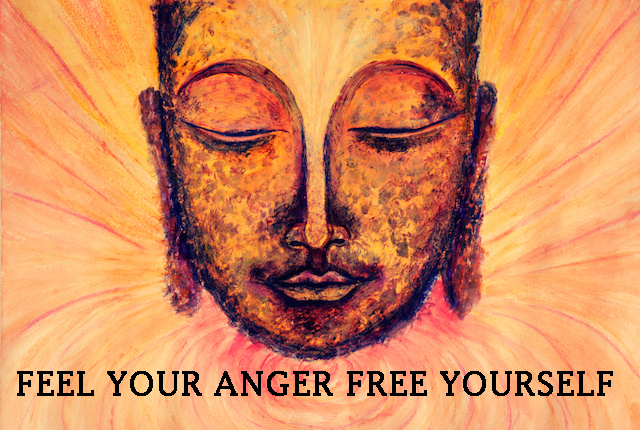
Uncomfortable emotions are not interruptions to life; they are part of the human experience. Anger, fear, sadness, guilt, and disappointment often carry important messages about our needs, values, and vulnerabilities. Rather than trying to eliminate these emotions, we can learn to understand them, regulate them, and use them as opportunities for growth. Emotional maturity is not measured by how little we feel, but by how wisely we respond to what we feel.
When we stop fighting our emotions and begin listening to them with curiosity and compassion, something remarkable happens. Anger can become courage, fear can become growth, and sadness can deepen our empathy. The goal of anger management and emotional regulation is not to become emotionless, but to become more resilient, self-aware, and intentional in how we navigate life’s challenges.
Ultimately, emotional mastery is about becoming a compassionate warrior—someone who can feel deeply, think clearly, and act wisely. By embracing our emotions rather than fearing them, we create the possibility for greater peace, stronger relationships, and a more meaningful life.
Final Thoughts
Uncomfortable emotions are not interruptions to life. They are part of life. They challenge us, humble us, and invite us to grow. The goal is not to eliminate anger, anxiety, sadness, or fear but to develop the capacity to understand and manage them wisely.
When we stop fighting our emotions and begin listening to them, something remarkable happens. Anger becomes a source of courage. Fear becomes a doorway to growth. Sadness deepens compassion. Vulnerability creates connection.
Emotional maturity is not about becoming less human. It is about becoming more fully human—someone who can feel deeply, think clearly, act wisely, and face life’s challenges with both strength and compassion.
That is not only the essence of anger management. It is the essence of a meaningful life.

