



Build Confidence, Set Boundaries, and Communicate Clearly Through Assertiveness Training in NYC
- Do you find it difficult to say no—even when you know you should?
- Do you avoid conflict, only to feel frustrated or resentful later?
- Do you struggle to express your needs clearly without feeling guilty, anxious, or misunderstood?
You are not alone.
Lack of assertiveness can affect your relationships and quality of life, as you fail to communicate effectively and probably end up not getting what you want. Family life, career prospects, and stress levels can all be affected by non-assertive behavior.
By examining carefully the way you communicate with others, there are a number of ways in which you can begin to assert yourself, helping to improve your quality of life. In this regard, assertiveness training can provide you with the necessary skills and benefits. You may read books and articles about the subject (the internet is a large resource). If you have tried to improve assertiveness but still find you are acting in a mostly passive or aggressive way, you may find talking to a trained counselor or psychotherapist useful.
Many individuals appear confident on the outside but struggle internally with self-expression. They hesitate, overthink, or second-guess themselves in conversations that matter most. Over time, this pattern can lead to stress, resentment, emotional exhaustion, and strained relationships.
Assertiveness is not something you are born with—it is a skill that can be learned, strengthened, and integrated into your daily life.
At spiral2grow Marriage Family Therapy, we provide assertiveness training in NYC designed to help you communicate clearly, set healthy boundaries, and develop a stronger, more confident sense of self. The goal is not to change who you are, but to help you express who you are more effectively and authentically.
What Is Assertiveness Training?
Assertiveness training is a structured and practical therapeutic process that helps you communicate your thoughts, feelings, and needs in a clear, respectful, and confident way.
It is about finding a balance between two extremes:
- Passivity, where you suppress your needs and avoid conflict
- Aggression, where communication becomes reactive, intense, or overpowering
Assertiveness exists in the middle. It allows you to express yourself honestly while maintaining respect for both yourself and others. When you become more assertive, you are not becoming more confrontational—you are becoming clearer, grounded, and emotionally present in your communication. Assertiveness allows you to build confidence and leadership.
Why Assertiveness Is So Difficult for Many People
If assertiveness is so beneficial, why do so many people struggle with it?
The answer often lies in early experiences and learned patterns.
You may have learned to:
- avoid conflict to keep peace
- prioritize others’ needs over your own
- fear rejection or disapproval
- associate speaking up with negative consequences
Over time, these patterns become automatic. You may not even realize you are suppressing your voice until the emotional cost becomes too great.
Assertiveness training helps you understand these patterns and replace them with healthier, more effective ways of communicating.
Signs You May Struggle with Assertiveness
Assertiveness challenges often show up in subtle but impactful ways.
You may notice:
- difficulty saying no without guilt
- avoiding difficult conversations
- agreeing to things you don’t truly want
- feeling unheard or overlooked
- building resentment in relationships
- overexplaining or apologizing excessively
- becoming passive or suddenly reactive under stress
These patterns can affect your relationships, your work, and your overall sense of well-being.
The good news is that these patterns are not permanent—they can be changed.
The Impact of Low Assertiveness on Your Life
When assertiveness is lacking, the consequences extend beyond individual conversations.
Over time, you may experience:
- chronic frustration and emotional buildup
- lack of clarity in relationships
- feeling taken advantage of or undervalued
- increased anxiety in communication
- disconnection from your own needs and desires
This can lead to a cycle where you either suppress your voice or express it in ways that feel out of control.
Assertiveness training helps break this cycle by creating a more balanced and intentional way of communicating.
Assertiveness vs. Aggression: Understanding the Difference
One of the biggest fears people have is that becoming assertive will make them appear harsh, selfish, or confrontational.
This is a misunderstanding.
- Passive communication avoids conflict but sacrifices your needs
- Aggressive communication expresses needs but damages relationships
- Assertive communication honors both your needs and the relationship
Assertiveness is about clarity without hostility, and confidence without control.
It allows you to stand your ground while maintaining respect and connection.
Assertive Behavior: The “Win-Win” Method
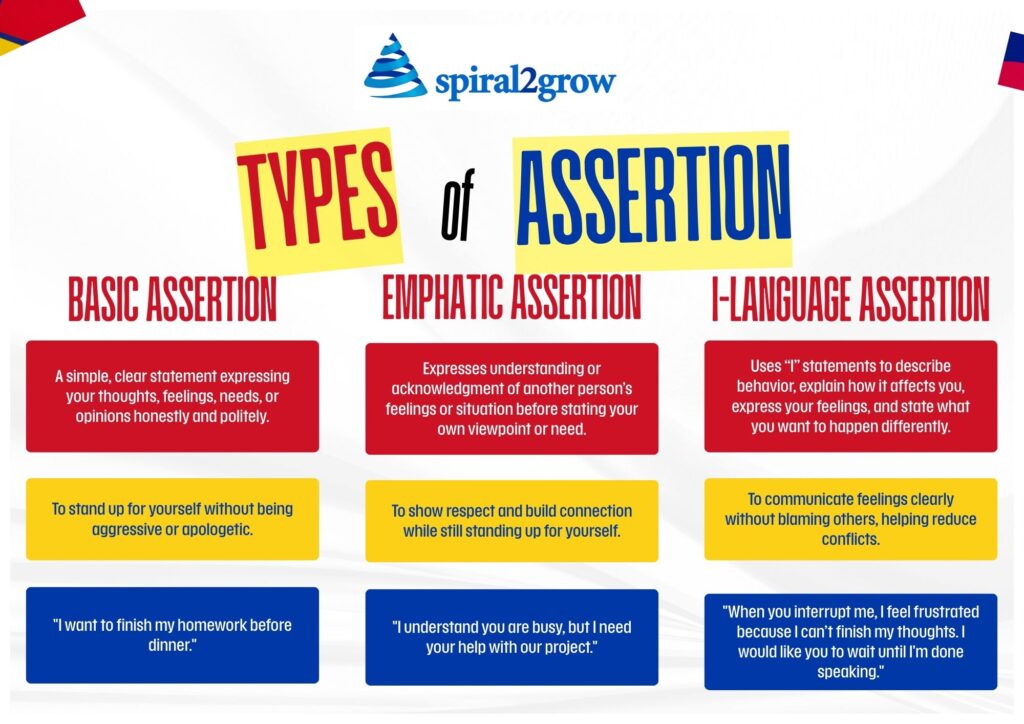
Assertiveness is the middle ground between passivity and aggression. It involves standing up for your needs and rights while respecting the needs and rights of others. This approach is rooted in honesty, empathy, and a commitment to finding solutions that benefit all parties involved.
Key Characteristics of Assertive Behavior
- direct and honest communication
- confidence paired with empathy
- a focus on mutual respect and collaboration
Assertive individuals seek to resolve conflicts constructively, using diplomacy and persuasion to achieve shared goals. This approach encourages deeper understanding and more meaningful connections.
What You Will Learn in Assertiveness Training
Assertiveness is not just a concept—it is a set of practical skills that can be developed and strengthened. Through assertiveness training, you will learn how to:
Set Healthy Boundaries
You will learn how to establish healthy boundaries and define and communicate your limits clearly, without guilt or over-explanation. This allows you to protect your time, energy, and emotional well-being.
Communicate Clearly and Directly
You will develop the ability to express your thoughts and feelings without hesitation, confusion, or unnecessary apology.
Manage Conflict with Confidence
Instead of avoiding or escalating conflict, you will learn how to stay calm, grounded, and present during difficult conversations.
Reduce Anxiety Around Speaking Up
You will build confidence so that expressing yourself becomes more natural and less stressful, even in challenging situations.
Handle Criticism and Feedback Effectively
You will learn how to receive feedback without becoming defensive or self-critical, and how to respond in a balanced and constructive way.
Assertiveness in Relationships
Assertiveness plays a crucial role in creating healthy and fulfilling relationships.
Without assertiveness:
- needs go unspoken
- boundaries become unclear
- resentment builds over time
- communication becomes indirect or reactive
With assertiveness:
- communication becomes clear and respectful
- both partners feel heard and valued
- conflicts are addressed before they escalate
- emotional connection deepens
Assertiveness allows you to stay connected to yourself while staying connected to others.
Assertiveness in the Workplace
Assertive communication is more than just a soft skill—it’s a powerful tool that sets true professionals apart. In this engaging and practical webinar, you’ll explore how to express yourself with clarity, confidence, and respect in even the most challenging workplace situations. Whether you’re concerned about coming on too strong or being seen as too passive, this session will equip you with actionable strategies to communicate effectively without compromising professionalism or personal integrity.
Many individuals struggle with assertiveness in professional environments. You may find it difficult to:
- speak up in meetings
- advocate for your ideas
- set boundaries with colleagues or supervisors
- ask for what you deserve
This can lead to feeling overlooked, undervalued, or stuck in your career. Assertiveness training helps you develop the confidence to communicate effectively in professional settings while maintaining professionalism and respect.
Emotional Barriers to Assertiveness
Even when you understand the assertiveness conceptually, emotional barriers can still make it difficult to practice.
Common internal barriers include:
- fear of rejection
- fear of conflict
- fear of being judged
- guilt about prioritizing your own needs
These emotional responses are deeply rooted and often automatic.
Therapy helps you identify and work through these barriers so that assertiveness becomes not just a skill, but a natural way of relating.
Practicing Assertiveness
To some degree, we all need to influence others, which makes assertiveness a key communication skill for everyone. When you practice assertiveness, you strive to establish healthy boundaries and take personal responsibility for your feelings, thoughts, and actions. But, as with many important things in life, it can be hard to move from theory to practice. Learning assertiveness skills is the key.
Assertiveness is empowering. It manifests itself in healthy communication and behavior. It aligns your position with the person you aspire to be. When you employ assertiveness elegantly, you give power not only to yourself but also to the people you interact with, and this promotes a win-win environment. You dramatically enhance your well-being, increase value, and influence others to gain positive results.
What to Expect in Assertiveness Training Sessions
Assertiveness training is a collaborative and practical process. In sessions, you can expect:
- real-life communication scenarios and role-playing
- structured exercises to build confidence
- feedback and guidance in a safe environment
- exploration of emotional patterns that affect your communication
The focus is not only on understanding assertiveness, but on practicing it in a way that becomes integrated into your daily life.
Long-Term Benefits of Assertiveness Training
As you develop assertiveness skills, the benefits extend into all areas of your life. You may experience:
- increased confidence and self-respect
- reduced anxiety in communication
- healthier and more balanced relationships
- greater emotional clarity
- improved decision-making
Assertiveness allows you to live more authentically and engage in relationships with greater honesty and ease.
Assertiveness Training in NYC
Living in New York City often means navigating fast-paced, high-pressure environments where communication matters. Without assertiveness, it is easy to feel overwhelmed, overlooked, or taken advantage of. Developing assertiveness skills can significantly improve your ability to navigate both personal and professional relationships in a demanding environment. If you are ready to strengthen your communication and build confidence, explore assertiveness training in New York City to develop the skills needed for healthier relationships and greater self-respect.
Work with Moshe Ratson (LMFT, MBA) in NYC
At spiral2grow Marriage Family Therapy, I provide assertiveness training that integrates evidence-based approaches and practical tools.
My work focuses on helping you move from:
- avoidance to clarity
- anxiety to confidence
- frustration to effective communication
Through a combination of emotional awareness, communication strategies, and structured guidance, you can develop the skills needed to express yourself fully and confidently.
Take the First Step
You don’t have to continue feeling unheard, overwhelmed, or unsure of how to express yourself. Assertiveness is a skill—and once you develop it, it can transform the way you experience your relationships, your work, and your sense of self. If you’re ready to build confidence, set boundaries, and communicate more effectively, reach out today to begin assertiveness training in NYC.

