



We Feel the Way We Think
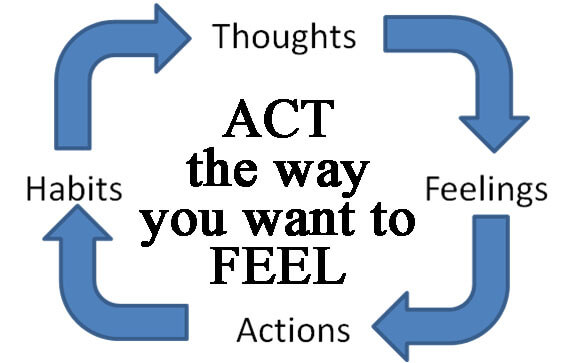
Our moods are influenced by our physical chemistry and by the negative or positive events that happen to us. We cannot change or prevent certain events (good or bad) from happening to us from time to time. Yet, this is only one of the factors that influence our moods, and it offers a limited view of our emotional system.
The Greek philosopher, Epictetus, said, Men are not disturbed by things, but by the views they take of them. In other words, our emotions and moods are not directly caused by the events that happen to us; rather, they are affected by the meaning we give to those events. As such, we get upset, angry, content or happy as a result of the way we interact and think about the events.
This old yet revolutionary knowledge has tremendous power. It allows us to change our position from a passive and victim view to a proactive and responsible view. It gives us the power to change the way we feel by changing the way we think; to choose healthy and constructive thoughts that lead to a durable and fulfilling life. It allows us to move from a beyond-our-control position to a within-our-control position. The within of our control position does not mean necessary to get what we want, but rather to do our best (within our power) to get what we want and to accept what is beyond our control. In other words, accept the things you cannot change (beyond your control), and change the things (within your control) that you cannot accept. Again, the adaptation of this philosophy builds self-esteem and self-confidence and creates a durable and fulfilling life.
Acceptance and Commitment Therapy (ACT)
In a world where many people struggle with anxiety, depression, stress, self-doubt, and emotional overwhelm, it is natural to seek relief by trying to eliminate painful thoughts and feelings. We distract ourselves, suppress emotions, avoid discomfort, overanalyze our struggles, or become trapped in a constant battle with our inner experience. Yet, despite our best efforts, fighting difficult emotions often intensifies suffering rather than resolving it. This is where Acceptance and Commitment Therapy (ACT) offers a refreshing and transformative approach.
Acceptance and Commitment Therapy, often called ACT (pronounced like the word “act”), is an evidence-based psychotherapy model that helps people develop a healthier relationship with their thoughts, emotions, and internal struggles. Rather than focusing primarily on reducing unpleasant feelings, ACT teaches individuals how to accept what is outside of their control, relate differently to painful inner experiences, and commit to actions that align with their deepest values. At its heart, ACT is about building psychological flexibility—the ability to remain present, open, and purposeful even in the face of discomfort.
Psychological flexibility is one of the greatest predictors of emotional well-being. Life is inherently uncertain, painful, and complex. We will all experience fear, sadness, disappointment, rejection, loss, conflict, and moments of vulnerability. ACT does not promise a pain-free life. Instead, it offers something more realistic and more empowering: the ability to carry life’s difficulties with greater wisdom while continuing to move toward what matters most.
A Powerful Path Toward Psychological Flexibility and Meaningful Living
One of ACT’s core principles is acceptance. Acceptance does not mean resignation, passivity, or liking painful experiences. Rather, it means making room for uncomfortable emotions instead of endlessly fighting them. Anxiety may arise before a difficult conversation, sadness may emerge after a loss, and fear may appear when pursuing a meaningful goal. ACT teaches that painful emotions are part of being human. When we stop wasting energy trying to control every inner experience, we free ourselves to invest that energy in living more fully. Acceptance creates emotional spaciousness and reduces the exhausting struggle against reality.
Another foundational aspect of ACT is cognitive defusion—learning to step back from thoughts rather than becoming fused with them. Many people live as though every thought in their mind is true. Thoughts such as “I’m not good enough,” “I’ll fail,” “No one understands me,” or “I can’t handle this” become unquestioned narratives that shape behavior and limit possibility. ACT teaches people to observe thoughts as mental events rather than facts. A thought is simply a thought—not necessarily truth, command, or prophecy. This shift creates freedom. Instead of being ruled by the mind, people learn to hold thoughts more lightly and choose actions based on values rather than fear.
ACT also places great emphasis on mindfulness and present-moment awareness. Much suffering comes from living mentally in the past—replaying regrets, hurts, or missed opportunities—or in the future—anticipating catastrophe, failure, or rejection. ACT teaches individuals how to anchor themselves in the present moment with openness and awareness. By becoming more mindful, people can respond to life more intentionally rather than react automatically. They become better able to notice emotions without being overwhelmed, recognize thought patterns without becoming trapped in them, and engage more deeply with the life unfolding in front of them.
Another powerful element of ACT is the concept of self-as-context, sometimes called the observing self. This perspective helps individuals recognize that they are more than their thoughts, emotions, and stories about themselves. A person may experience anxiety, but they are not anxiety. They may feel shame, but they are not shame. They may carry painful history, but their identity is larger than their wounds. ACT helps people connect with the deeper part of themselves that can observe inner experiences with compassion and steadiness. This creates a sense of inner grounding and spaciousness, even during emotional storms.
Perhaps the most meaningful and life-changing component of ACT is its focus on values. ACT asks a profound question: What truly matters to you? What kind of person do you want to be? What qualities do you want to embody in your relationships, work, family life, health, and contribution to the world? Values are not goals to achieve once and complete; they are guiding directions that shape how we live. For example, a person may value love, courage, authenticity, growth, compassion, integrity, or connection. These values become a compass, helping individuals navigate life with purpose.
Once values are clarified, ACT emphasizes committed action—taking meaningful steps aligned with those values, even when fear, discomfort, or uncertainty arise. This is where ACT becomes deeply empowering. You may feel anxious and still speak honestly. You may feel grief and still choose connection. You may experience self-doubt and still pursue your calling. You may feel discomfort and still set healthy boundaries. ACT teaches that courage is not the absence of pain; it is the willingness to move forward in the service of what matters.
The value of ACT lies in its practical wisdom. It helps people stop struggling against their inner life and start living intentionally. It cultivates resilience, emotional flexibility, and greater peace. It supports people in breaking cycles of avoidance, perfectionism, rumination, and self-limitation. It teaches that meaningful living is not found in controlling every thought or feeling, but in learning how to hold them with openness while acting from one’s values.
ACT is especially valuable because its principles apply broadly—to anxiety, depression, trauma recovery, chronic stress, relationship challenges, performance anxiety, addiction recovery, grief, and personal growth. It is not simply a therapy model; it is a philosophy for living with greater courage, presence, and authenticity.
Ultimately, Acceptance and Commitment Therapy invites people into a deeper truth: you do not need to wait until fear disappears, pain resolves, or life becomes perfect before you begin living fully. You can learn to make space for discomfort, unhook from limiting thoughts, connect with what matters most, and take committed action toward a meaningful life—starting exactly where you are. That is the profound gift of ACT.
Learn more about other therapeutic approaches by spiral2grow Marriage Family Therapy.

