



What Is Worse – A Physical Or Emotional Affair?
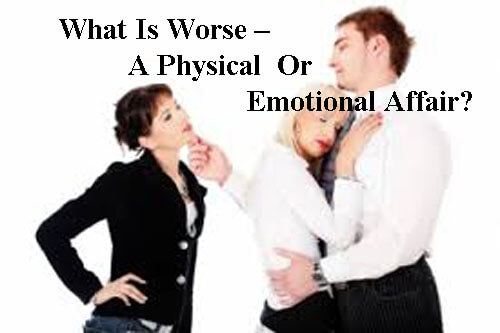
Things have been suspicious for a while. You are seeing them distance themselves from you. Their eyes do not light up like they used to when you were around. They do not laugh at your jokes anymore. Where could all this be leading to? Are they falling out of love? Has someone else gotten their interest? How can you be so blind not to notice it in the first place? Did you fall for the wrong person? Whether it is a physical affair or an emotional affair, it has the potential to psychologically mess up the person who is being cheated on.
Emotional Affairs: Are they Innocent?
It seems like for women, emotional affairs are more painful, whereas for men, physical affairs of their partner behind their back hurt them more than anything else does. Some may argue that if two people are not sleeping together, it does not constitute cheating. Obviously, it is not as easily defined, and it is more complex than just a simple black-and-white answer. At times, it is even the emotional infidelity that does the most damage. Generally, women connect with their romantic partner through emotions. This connection gives birth to the emotion of love, and don’t we all long for that kind of emotional connection? No matter how innocent the emotion of infidelity is, it is more destructive for the person as well as for their marriage.
When that intimate emotional connection, which should be between spouses, is shared with a third person, the damage to the relationship is already done. The intimate stories, the funny jokes, the childhood incidents, which they only shared with you, are not just yours anymore. Their love, which was once yours, is not there anymore. This does not mean that physical affairs do not hurt. Anything that goes against the rules of the relationship and is done behind the back of one of the spouses will hurt as much.
However, some people are more open towards forgiving sexual intimacy than emotional intimacy. You can connect sexually with anyone because of the heat of the moment, but to connect at an emotional level, it really requires vulnerability and emotional investment. People understand that satisfying the physical need does not require the feeling of affection, but for emotional connection, the sentiment of warmth and fondness is essential.
Can One Transform into Another?
Sexual intimacy is all about the availability of the person who led to the affair. Most of the time, people involved in physical affairs are either punishing their partner, themselves, or trying to fill the void inside of them. Men express themselves in a physical way; this is why they rate the pain from physical affairs higher. They are also instinctively possessive and protective of their spouse. They do not like sharing what is theirs, in a literal sense, and if that is done, they cannot help but feel betrayed. Some male spouses also tend to imagine what went down, and torment themselves again and again.
Where women like being the secret sharers for their spouses, and their emotional support, men like satisfying their women. If there is someone else to do their work, they feel threatened and inadequate. Sex is an important aspect of a relationship, and most of the time, a sexual affair has the potential to turn into an emotional one. At times, it also happens the other way, when friendship and emotional connection evolve into a sexual relationship. Similarly, an emotional affair can transform into a sexual one because you start becoming comfortable with the person. You start to develop a certain kind of likeness towards them, and then you just have to connect with them in every way possible.
Seeking any of these affairs outside a committed relationship will cause you nothing more than trouble. There is no telling whether one hurts more than the other. As Cheryl Hughes said, “The truly scary thing about undiscovered lies is that they have a greater capacity to diminish us than exposed ones.” Therefore, it is important to seek relationship counseling if you find yourself straying in either of the directions. Couples counseling will also help if you are the one going through the emotional roller coaster that your spouse has put you on.
Few experiences are as devastating to a relationship as discovering that your partner has been unfaithful. Whether the betrayal involves sexual intimacy or a deep emotional connection with someone else, infidelity shakes the very foundation of trust upon which healthy relationships are built. It often leaves the betrayed partner asking painful questions: How could this happen? Was I not enough? Can I ever trust again?
One of the most common debates among couples is whether a physical affair or an emotional affair is more damaging. Some argue that sex is the ultimate betrayal because it violates the exclusivity of the relationship. Others believe that emotional intimacy is even more painful because it represents a deeper transfer of love, affection, and commitment. The truth, however, is far more complex. Rather than asking which type of affair is objectively worse, it may be more helpful to understand what each type of betrayal represents and why different people experience them so differently.
Understanding Physical Affairs
A physical affair generally involves sexual intimacy outside the committed relationship. It may be a one-time encounter or an ongoing sexual relationship, but the defining characteristic is physical contact that violates the agreed-upon boundaries of the partnership.
For many people, sexual exclusivity is one of the central commitments of marriage or long-term relationships. When that commitment is broken, the betrayed partner often experiences intense feelings of humiliation, anger, grief, and insecurity. Images of the sexual encounter may replay repeatedly in their mind, making it difficult to concentrate, sleep, or feel emotionally safe.
Yet physical affairs are not always rooted in love. Some occur impulsively, fueled by alcohol, opportunity, loneliness, or poor boundaries rather than emotional attachment. While this fact may provide context, it rarely reduces the pain experienced by the injured partner. Betrayal is still betrayal.
Understanding Emotional Affairs
An emotional affair develops when one partner forms a deep emotional bond with someone outside the relationship while gradually withdrawing emotional intimacy from their spouse or partner. Although no sexual contact may occur, the relationship often involves sharing private thoughts, personal dreams, emotional vulnerabilities, and affection that traditionally belong within the primary partnership.
Emotional affairs usually develop slowly. They often begin as innocent friendships, workplace relationships, or online conversations. Over time, however, emotional dependence increases. The outside person becomes the first one someone wants to text after receiving good news, the person they seek for comfort during difficult times, or the individual with whom they feel most understood.
Secrecy is often the defining feature. Conversations become hidden, phones become guarded, and emotional energy gradually shifts away from the committed relationship.
Many betrayed partners describe emotional affairs as feeling like they have already lost their spouse long before any physical intimacy occurs.
Why Emotional Affairs Can Feel More Painful
As a couples therapist, I often hear clients say that they could have forgiven “just sex,” but they struggle far more with knowing their partner fell in love with someone else.
Emotional intimacy represents much more than conversation. It reflects trust, vulnerability, admiration, and attachment. When these emotional investments are directed toward another person, the primary relationship often begins to wither.
Many people experience emotional affairs as a gradual abandonment. Their partner may still be physically present at home, yet emotionally absent. Conversations become superficial, affection declines, and emotional responsiveness disappears.
For the betrayed partner, this loss can feel profoundly isolating. They may wonder when they stopped being their partner’s safest place or closest confidant.
Why Physical Affairs Can Feel More Devastating
For others, sexual infidelity represents the ultimate violation of trust. Physical intimacy often carries symbolic meaning beyond the act itself. It represents exclusivity, commitment, and the unique bond shared between partners.
Knowing that a spouse has shared their body with someone else may trigger feelings of disgust, rejection, and inadequacy. Many individuals become consumed with comparisons, wondering whether the other person was more attractive, exciting, or sexually satisfying.
Physical affairs may also introduce practical concerns, including sexually transmitted infections, unwanted pregnancies, public embarrassment, or damage to family relationships. These realities can intensify the emotional trauma.
For some individuals, particularly those whose love language centers around physical intimacy, sexual betrayal may feel nearly impossible to separate from emotional rejection.
There Is No Universal Answer
Research has shown that men and women have sometimes differed in the type of infidelity they report as most distressing, although these differences are far from absolute. Some studies suggest that men, on average, report greater distress over sexual infidelity, while women often report greater distress over emotional infidelity. However, these findings represent broad trends rather than individual truths.
Every relationship has its own emotional landscape. Personal history, attachment style, previous betrayals, cultural values, religious beliefs, and childhood experiences all influence how infidelity is experienced.
For one couple, a single sexual encounter may be easier to recover from than months of secret emotional intimacy. For another, an emotional affair may eventually become physical, making the distinction almost meaningless.
Ultimately, it is not the label that determines the damage—it is the meaning attached to the betrayal.
The Real Injury Is Broken Trust
Although couples often debate whether physical or emotional affairs are worse, both share a common element: deception.
Most affairs require secrecy, dishonesty, and broken promises. The injured partner often says that the lies hurt even more than the affair itself.
Once trust has been shattered, every memory becomes questionable. People begin wondering whether past conversations were truthful, whether business trips were genuine, or whether expressions of love were sincere. The betrayal creates uncertainty not only about the future but also about the past.
Trust is the emotional glue that allows vulnerability, intimacy, and security to flourish. Without it, even ordinary interactions can become filled with suspicion and fear.
Can a Relationship Recover?
Although infidelity creates profound pain, it does not automatically mean the relationship must end. Many couples successfully rebuild stronger, healthier marriages after an affair. Recovery, however, requires much more than simply ending the outside relationship.
The partner who was unfaithful must take full responsibility for their choices without minimizing, blaming, or becoming defensive. Genuine remorse involves empathy for the injured partner’s pain, transparency, and a willingness to patiently rebuild trust over time.
The betrayed partner, meanwhile, needs space to process grief, anger, confusion, and fear. Healing cannot be rushed. Questions often need to be answered repeatedly before emotional safety begins to return.
Couples who recover most successfully usually move beyond simply asking, “How did this affair happen?” They also ask, “What vulnerabilities existed within our relationship, and how can we build something stronger moving forward?”
This process often involves improving communication, strengthening emotional intimacy, addressing unresolved conflicts, rebuilding friendship, and learning healthier ways of expressing needs and vulnerabilities.
Moving Beyond the Affair
Whether an affair is physical, emotional, or both, the deepest wound is usually not the sexual behavior itself but the loss of emotional safety. Relationships thrive when partners believe they are chosen, valued, and emotionally protected. Infidelity challenges all three of these assumptions.
Healing requires courage from both partners. It demands honesty, accountability, compassion, and patience. While some relationships ultimately end after an affair, many others emerge with greater self-awareness, stronger communication, and a deeper appreciation for emotional connection than they had before.
Instead of asking whether physical or emotional infidelity is worse, couples may benefit more from asking a different question: How can we create a relationship where both emotional and physical intimacy are intentionally protected, nurtured, and cherished?
When trust becomes the highest priority, both forms of fidelity naturally become expres

