



Powerful Habits Lead to a Successful and Fulfilling Life
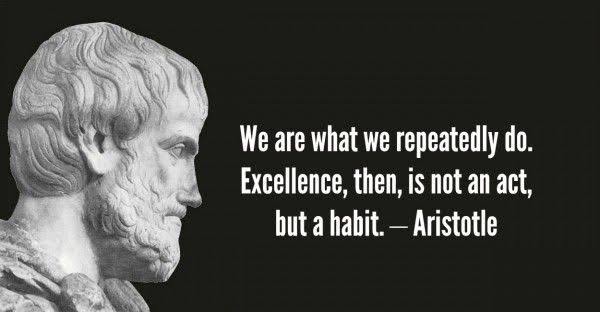
Aristotle said, “We are what we repeatedly do. Excellence, then, is not an act, but a habit.”
There is a certain set of characteristics that every healthy person has in common. If you are able to understand what some of these traits of healthy people are, you too will be able to adopt these practices and finally achieve some of the success and happiness that you’ve always wanted.
Your Life Is Quietly Built by Repetition
Most people imagine transformation as dramatic.
A breakthrough.
A powerful insight.
A life-changing decision.
A moment of inspiration.
But most lives are not shaped by rare moments. They are shaped by repeated ones.
A person does not suddenly become confident. Confidence is built through repeated acts of courage. A healthy marriage is not created through one romantic gesture. It is built through repeated emotional investment. Physical health is not the result of one workout. Financial stability is not created through one good decision.
Human beings become what they repeatedly practice.
Habits quietly sculpt identity.
Every repeated action teaches the nervous system who we are, what we value, what we tolerate, and what direction our life is moving toward. Whether consciously or unconsciously, habits become psychological architecture. They organize our time, shape our thinking, influence our emotional state, affect our relationships, and determine the quality of our future.
People often focus intensely on goals while ignoring habits.
But goals create direction. Habits create reality.
A person may dream of becoming emotionally balanced, physically healthy, financially successful, spiritually grounded, or deeply connected relationally. Yet without daily behavioral patterns aligned with those values, dreams remain imagination.
Life eventually reflects repeated behavior more than temporary motivation.
Why Habits Are So Powerful
Habits reduce internal resistance.
Once a behavior becomes automatic, it requires less emotional negotiation. This is why habits are more powerful than willpower alone.
Willpower fluctuates.
Motivation fluctuates.
Emotions fluctuate.
Habits create consistency despite emotional fluctuation.
A person who exercises only when motivated will struggle. A person who has built exercise into identity and routine functions differently psychologically. The same applies to communication, emotional regulation, productivity, meditation, financial discipline, parenting, and relationships.
Habits bypass endless internal debate.
This matters because human beings are creatures of comfort. The brain naturally seeks efficiency, familiarity, and energy conservation. Habits allow behavior to become integrated into automatic functioning rather than relying constantly on conscious effort.
Unfortunately, this principle works both ways.
Negative habits also become automated:
- procrastination,
- avoidance,
- emotional reactivity,
- negative thinking,
- doom-scrolling,
- impulsive spending,
- emotional eating,
- self-criticism,
- chronic complaining,
- or withdrawing from intimacy.
Over time, unhealthy habits stop feeling like choices and start feeling like personality.
But many personalities are simply rehearsed patterns.
Habits Shape Emotional Life
People often think habits are only behavioral. In reality, emotional patterns are habits too.
Some individuals habitually catastrophize.
Others habitually self-criticize.
Others habitually avoid conflict.
Others habitually suppress emotion.
Others habitually seek validation.
The mind practices emotional states repeatedly until they become psychologically familiar.
This is why some people unconsciously return to stress even when peace becomes available. Chaos feels familiar. Hypervigilance feels normal. Emotional overthinking feels productive.
The nervous system becomes conditioned through repetition.
This means fulfillment is not only created through external success. It is deeply connected to internal habits:
- how we speak to ourselves,
- how we regulate stress,
- how we treat others,
- how we respond to setbacks,
- how we tolerate discomfort,
- and how we direct attention daily.
A fulfilling life is rarely accidental.
It is usually constructed through small repeated choices that eventually become identity.
Successful People Protect Their Habits Fiercely
Highly successful people are not necessarily more talented than everyone else. Often, they are simply more intentional with their habits.
They understand something important: small behaviors repeated consistently create extraordinary long-term outcomes.
Successful individuals often prioritize:
- structure,
- consistency,
- discipline,
- focus,
- emotional regulation,
- and long-term thinking.
Many wake up early not because early mornings are magical, but because intentional mornings reduce chaos. They exercise not only for appearance but because movement affects mood, cognition, energy, confidence, and stress regulation. They protect sleep because exhaustion weakens judgment and emotional stability.
They also tend to manage attention carefully.
Attention is one of the most valuable psychological resources human beings possess. Yet modern culture continuously fragments it. Endless notifications, social media stimulation, multitasking, and constant distraction weaken depth, reflection, creativity, and emotional presence.
Many fulfilled individuals intentionally create habits that protect mental clarity:
- reading,
- journaling,
- planning,
- meditation,
- silence,
- focused work,
- and intentional disconnection from overstimulation.
Success is often less about intensity and more about consistency.
Fulfillment Requires More Than Productivity
Modern culture frequently glorifies productivity while neglecting meaning.
People become highly efficient while remaining emotionally empty.
A fulfilling life requires more than achievement habits. It also requires relational, emotional, physical, and spiritual habits.
A person may build wealth while neglecting intimacy.
They may achieve status while abandoning health.
They may become productive while emotionally disconnected from themselves.
Eventually, an imbalance creates suffering.
True fulfillment usually emerges through balanced habits across multiple dimensions of life:
- physical health,
- emotional well-being,
- meaningful relationships,
- purposeful work,
- inner peace,
- contribution,
- and personal growth.

Habits are not merely tools for success. They are tools for alignment.
The question is not simply:
“What do I want to achieve?”
But also:
“What kind of human being am I becoming through my daily patterns?”
Building Habits Requires Understanding Human Nature
Many people fail at habit-building because they rely excessively on motivation.
Motivation is unreliable.
Some mornings people feel inspired. Other mornings, they feel exhausted, discouraged, distracted, or emotionally overwhelmed.
Habits become sustainable when behavior is simplified and repeated consistently enough to become psychologically integrated.
Small steps matter.
A person who wants to start exercising may fail trying to suddenly train for two hours daily. But ten minutes consistently practiced often creates momentum. The brain resists overwhelming change but adapts more easily to gradual repetition.
Perfectionism destroys many habit-building efforts.
People miss one workout, one meditation session, one productive day, and suddenly conclude:
“I failed.”
This all-or-nothing mentality creates inconsistency.
Successful habit-building depends more on returning than on perfection.
Missing occasionally is normal. Quitting entirely is what creates regression.
Consistency over time matters more than emotional intensity.
Identity-Based Habits
One of the most powerful psychological shifts occurs when people stop focusing only on outcomes and start focusing on identity.
Instead of: “I want to write a book.”
The mindset becomes: “I am someone who writes regularly.”
Instead of: “I want to get healthy.”
The mindset becomes: “I am someone who values and cares for my body.”
Instead of: “I want a better relationship.”
The mindset becomes: “I am someone who practices communication, empathy, and emotional responsibility.”
Identity-based habits become more sustainable because behavior aligns with self-concept.
Human beings naturally seek consistency between identity and action.
This is why repeated small actions matter psychologically. Every repeated behavior reinforces identity.
Each workout says: “I take care of myself.”
Each honest conversation says: “I value authenticity.”
Each moment of discipline says: “I can tolerate discomfort for long-term growth.”
Identity slowly evolves through repetition.
Habits and Emotional Resilience
Powerful habits do not eliminate hardship. They increase resilience during hardship.
People with strong emotional habits recover faster from setbacks because they have internal structure. They know how to ground themselves, regulate emotions, seek support, reflect, and adapt.
Without healthy habits, stress easily destabilizes life.
During difficult periods people often abandon the very behaviors they need most:
- exercise,
- sleep,
- social connection,
- therapy,
- journaling,
- spiritual practices,
- or healthy routines.
This creates emotional deterioration.
Strong habits function like psychological anchors during emotional storms.
They stabilize identity when life becomes uncertain.
The Environment Shapes Habits
People often underestimate the power of the environment. The environment influences behavior constantly.
A distracted environment produces distraction.
A chaotic environment produces mental fragmentation.
A healthy environment supports healthier choices.
This includes:
- physical space,
- social relationships,
- digital consumption,
- routines,
- and emotional atmosphere.
If someone surrounds themselves with negativity, constant drama, unhealthy relationships, or endless distraction, sustaining positive habits becomes significantly harder.
Likewise, relationships deeply influence habits.
Human beings unconsciously absorb the behaviors, emotional patterns, and values of those around them.
This is why supportive communities matter.
Growth accelerates when people surround themselves with individuals who encourage accountability, purpose, discipline, compassion, and authenticity.
Discipline Is an Act of Self-Respect
Many people view discipline harshly, as punishment or rigidity.
Healthy discipline is actually self-respect.
It means caring enough about your future self to tolerate temporary discomfort today.
Discipline says:
“I will not sabotage tomorrow for momentary relief today.”
This applies emotionally as well.
Emotionally mature individuals learn not to obey every impulse, mood, or craving immediately. They develop the capacity to pause, reflect, and choose intentionally.
Freedom without discipline often becomes self-destruction.
Paradoxically, structure often creates greater freedom long-term:
- financial discipline creates financial freedom,
- emotional discipline creates relational stability,
- physical discipline creates health,
- mental discipline creates clarity.
A fulfilling life usually requires the willingness to repeatedly choose long-term meaning over short-term comfort.
Small Habits Create Massive Life Changes
People dramatically underestimate how much small repeated actions matter over years.
Tiny habits accumulate quietly.
One conversation improves trust.
One workout improves health.
One boundary improves self-respect.
One page read daily becomes knowledge.
One honest reflection increases self-awareness.
Likewise, destructive habits accumulate slowly:
- avoidance,
- resentment,
- emotional neglect,
- procrastination,
- unhealthy coping,
- chronic negativity.
Life rarely collapses overnight.
Most decline happens gradually through repeated unconscious choices.
Fulfillment also develops gradually.
A meaningful life is usually not built through giant dramatic moments but through repeated intentional living.
List of Healthy Habits
The following is a partial list of habits of healthy, mature, and successful people:
- High level of integrity
- Set vision, goals, and priorities
- Look at life as a journey for growth
- Develop courage and act despite fear
- Focus on the solution rather than the problem
- Being proactive rather than reactive or a victim
- Focus on opportunities (to grow) rather than obstacles
- Develop organizational, planning, and time management skills
- Work methodically, systemically, yet creatively (think out of the box)
- Align themselves with people with positive character
- Make a difficult decision and accept its consequences
- Are lifelong learners
- Avoid procrastination
- Look at the big picture
- Focus on the half glass full
- Practice what they preach
- Open-minded and open to feedback
- Focus on being wise and not on being right
- Be assertive (not aggressive and not passive)
- Effective communicator and thoughtful listener
- Identify and follow their core values and beliefs
- Are adaptable, resilient, and flexible while embracing change
- Focus on changing themselves rather than changing others
- Develop their emotional intelligence (IE) and Social Intelligence (SI)
By developing healthy habits that you practice continuously on a daily basis, you can increase your chances of living a long and vibrant life. That is why establishing an early foundation of healthy habits can last a lifetime and will lead you to a become a better person who has a better life.
A Fulfilling Life Is Built, Not Found
Many people search endlessly for fulfillment as if it exists somewhere outside themselves.
But fulfillment is often less about finding the perfect life and more about creating daily alignment between values and behavior.
Peace comes from congruence.
When daily actions reflect deeper values, people experience greater internal stability.
This does not mean life becomes easy.
There will still be stress, grief, disappointment, uncertainty, and setbacks.
But powerful habits help individuals remain connected to direction even during difficulty.
Ultimately, habits are not simply routines.
They are repeated votes for the kind of life we want to live.
Every day, consciously or unconsciously, people are training themselves into someone.
The real question becomes:
Are your habits creating the life you truly want — or quietly pulling you away from it?
To build healthy habits and a healthy life, and gain support, contact spiral2grow in New York City for life coaching guidance.

