



Anger Management and The Power of Buddhism
Anger management, or better said, a healthy anger management, is one of the most important qualities any human being can have. Allowing anger to control our actions basically makes us powerless. Buddhism teaches us that anger challenges us to look deeply into ourselves and understand ourselves. So, when you deal with anger, clarify for yourself you’re the needs that is created by your mind. It’s important to understand that anger is something created by our mind. We tend to think that anger is caused by something outside ourselves, such as other people’s “wrongdoing” or ”bad judgment,” or disappointing events. But the fact is that no one makes you angry, but you yourself. It is not what happens to us but what we make of it that makes all the difference. It is our unfulfilled needs and expectations that make us angry.

Buddhism teaches patience and mindfulness. Being mindful of ourselves and being patient with ourselves is a key part of that philosophy. When an unpleasant feeling or thought arises, do not suppress it, run away from it, or avoid it. Instead, observe and face it and fully acknowledge it. Once acknowledge the feeling, then process it by understanding the need and desire underneath the anger. Understand and accept the need that is not met. It is important to be honest with yourself about yourself and clear about your needs. Based on Buddhism, this factor is the main factor to grow and have a healthy life.
To solve the problem of anger, we first need to recognize the anger within our mind, acknowledge how it harms both ourselves and others, and understand the importance of patience and being less reactive. It is not easy to be patient in the face of difficulties, yet we need to appreciate its benefits. Practicing patience is the answer to anger and allows us to overcome its negative consequences.
Anger is one of the most powerful and challenging emotions human beings experience. It can motivate us to protect ourselves, defend our values, and respond to injustice. Yet it can also damage relationships, cloud judgment, and create tremendous suffering when expressed in unhealthy ways.
Modern psychology offers many valuable tools for anger management, including emotional regulation, cognitive restructuring, mindfulness, and assertive communication. However, long before psychologists began studying anger, Buddhist teachings explored the nature of human suffering and provided profound insights into managing difficult emotions.
Although Buddhism is often associated with peace and tranquility, it does not teach people to suppress anger or pretend that painful emotions do not exist. Rather, Buddhism offers a framework for understanding why anger arises, how it creates suffering, and what we can do to develop a healthier relationship with it.
In many ways, Buddhist philosophy aligns closely with modern approaches to anger management. Both emphasize awareness, personal responsibility, compassion, and the importance of responding rather than reacting. Together, they offer powerful guidance for transforming anger from a destructive force into an opportunity for growth and wisdom.
Understanding the Root of Anger
One of the fundamental teachings of Buddhism is that suffering arises when reality does not match our desires, expectations, or attachments. We want life to unfold in a certain way, and when it does not, we experience frustration, disappointment, and often anger.
This observation is remarkably relevant to anger management.
Consider how often anger emerges when something interferes with what we want. A spouse behaves differently than expected. A coworker fails to follow through on a commitment. Traffic delays us when we are in a hurry. Technology fails when we need it most. Someone says something that feels disrespectful or unfair.
In each of these situations, reality collides with our expectations.
From a Buddhist perspective, the problem is not only the external event. The deeper issue is our attachment to how we believe things should be. The stronger the attachment, the greater the emotional suffering when reality fails to cooperate.
This does not mean that expectations are inherently wrong. It means that emotional freedom increases when we learn to hold expectations more lightly and develop greater acceptance of life’s inevitable imperfections.
The Second Arrow
One of the most powerful Buddhist teachings related to anger is known as the “Second Arrow.”
The Buddha taught that when something painful happens, we are struck by a first arrow. This first arrow represents the actual event or difficulty. Perhaps someone criticizes us, disappoints us, or behaves unfairly.
However, we often shoot ourselves with a second arrow.
The second arrow consists of our mental reactions to the event. We replay the situation repeatedly in our minds. We become consumed with resentment. We imagine revenge. We tell ourselves stories about how wrong the other person was and how badly we were treated.
While we may not be able to avoid the first arrow, we often have some influence over the second.
Much of the suffering associated with anger comes not from the original event but from the mental and emotional story we continue to create around it.
Awareness Before Reaction
A central principle of both Buddhism and anger management is awareness.
Most people experience anger as an automatic reaction. Something happens, and they immediately become upset. They may lash out, criticize, withdraw, or become defensive without fully understanding what is occurring within them.
Buddhism encourages a different approach.
Rather than immediately reacting, individuals learn to observe their thoughts, emotions, and physical sensations with curiosity and openness. They develop the capacity to witness anger without becoming consumed by it.
This practice of mindful awareness creates space between the trigger and the response.
Within that space lies freedom.
The more aware we become of our emotional processes, the less likely we are to be controlled by them. We begin recognizing the physical sensations associated with anger, the thoughts that intensify it, and the patterns that repeatedly trigger it.
Awareness does not eliminate anger, but it changes our relationship with it.
Anger Is Temporary
One of the most important Buddhist teachings is the concept of impermanence.
Everything changes.
Thoughts change.
Emotions change.
Relationships change.
Life circumstances change.
Yet when people become angry, they often act as though the emotion will last forever. In the heat of the moment, anger feels permanent and overwhelming.
Mindfulness teaches us to observe the changing nature of emotional experience. If we sit quietly and pay attention, we notice that anger rises, intensifies, and eventually fades. Like a wave, it comes and goes.
This realization can be incredibly liberating.
When people recognize that emotions are temporary, they become less likely to react impulsively. Instead of acting on every angry feeling, they learn to ride the wave and allow it to pass naturally.
Compassion as an Antidote to Anger
One of Buddhism’s greatest contributions to anger management is its emphasis on compassion.
When people are angry, they tend to focus entirely on their own pain, frustration, or disappointment. The other person becomes the villain in the story.
Compassion invites a broader perspective.
It encourages us to consider the struggles, fears, insecurities, and suffering of others. This does not mean excusing harmful behavior or becoming passive. It simply means recognizing that every person is fighting battles we may not fully understand.
The coworker who lashes out may be overwhelmed by stress.
The spouse who becomes defensive may feel hurt or misunderstood.
The stranger who behaves rudely may be carrying burdens we know nothing about.
Compassion softens the harshness of anger without diminishing our ability to establish boundaries or protect ourselves.
It allows us to remain human even when others are difficult.
Self-Compassion Matters Too
Many people who struggle with anger become highly self-critical.
After losing their temper, they shame themselves, judge themselves, and conclude that they are failures.
Buddhism teaches the importance of self-compassion.
Growth does not come from self-condemnation. It comes from awareness, responsibility, and kindness toward oneself.
When we make mistakes, the goal is not to punish ourselves endlessly. The goal is to learn, repair the damage when possible, and move forward with greater wisdom.
This perspective is particularly important in anger management because change is rarely immediate. Emotional habits often develop over decades. Patience and self-compassion are essential components of lasting growth.
Letting Go of the Ego
Another powerful Buddhist insight involves the role of the ego.
Many anger episodes are fueled not by genuine threats but by perceived threats to our self-image. We feel disrespected, criticized, ignored, or unappreciated.
The ego demands recognition, validation, and control.
When these needs are frustrated, anger often follows.
Buddhist teachings encourage individuals to examine their attachment to identity and self-importance. The question becomes:
“What exactly am I defending?”
Sometimes we are protecting important values and boundaries. Other times we are protecting pride, status, or the need to be right.
This distinction matters.
When people become less attached to proving themselves right or defending their ego, many sources of anger begin to lose their power.
They become freer to listen, learn, forgive, and move forward.
The Compassionate Warrior
In my work with anger management clients, I often discuss the concept of the Compassionate Warrior. Interestingly, this idea shares much in common with Buddhist principles.
The passive person avoids conflict and suppresses emotions.
The aggressive person attacks and attempts to dominate.
The Compassionate Warrior follows a middle path.
They possess both strength and compassion. They stand up for themselves while respecting others. They communicate assertively without becoming hostile. They acknowledge anger without becoming controlled by it.
This balanced approach reflects the wisdom found in many Buddhist teachings.
True strength is not the absence of emotion.
True strength is the ability to remain grounded, aware, and compassionate even when powerful emotions arise.
Conclusion
Buddhism does not promise a life free from anger. As long as we are human, we will experience frustration, disappointment, and emotional pain. What Buddhism offers is a different way of relating to these experiences.
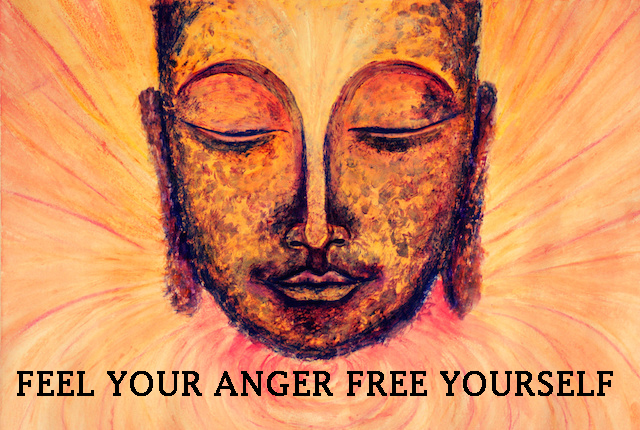
Through mindfulness, compassion, acceptance, and self-awareness, we learn that anger does not have to control us. We discover that much of our suffering comes not from external events themselves but from our attachment to how life should be. We learn to observe emotions rather than become consumed by them, and we develop the ability to respond with wisdom rather than react impulsively.
Perhaps the greatest lesson Buddhism offers for anger management is that inner peace is not found by controlling the world around us. It is found by transforming our relationship with our thoughts, emotions, and expectations.
When we practice awareness, cultivate compassion, and let go of unnecessary attachments, anger loses much of its destructive power. Instead of becoming an enemy, it becomes a teacher. It points us toward areas of growth, unresolved wounds, important values, and opportunities for greater understanding.
In this way, anger can become what I often describe as a compass—not something to fear, but something to learn from. Guided by wisdom and compassion, it can lead us toward healthier relationships, greater emotional freedom, and a more meaningful life.
Learn more about anger management and meditation

